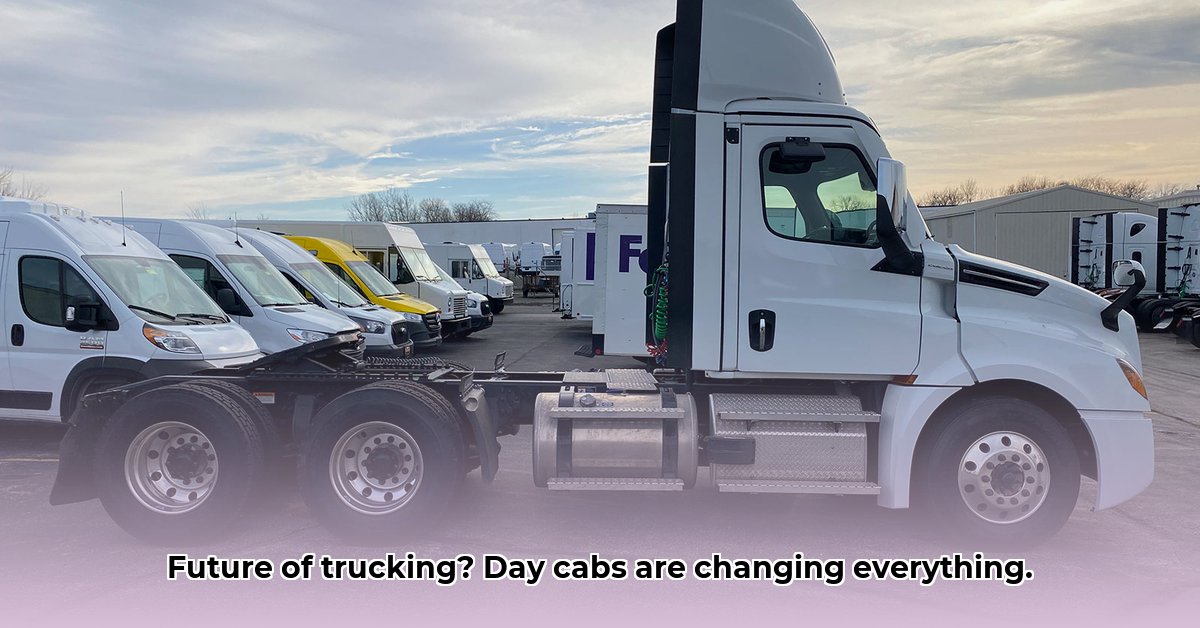
The day cab tractor market, a cornerstone of regional freight transport, is undergoing a significant transformation. This evolution is fueled by a confluence of technological advancements, tightening regulations, and fluctuating economic conditions, presenting both challenges and opportunities for manufacturers, fleet operators, and drivers alike. This article analyzes these forces, offering actionable insights for navigating this dynamic landscape.
Understanding the Current Market Dynamics
Day cab tractors, optimized for shorter hauls, are indispensable for regional delivery networks, supporting diverse sectors from construction to consumer goods. However, this market faces considerable pressure. The rising cost of fuel significantly erodes profit margins, forcing cost-cutting measures. Simultaneously, increasingly stringent environmental regulations mandate cleaner, more efficient engines, demanding substantial investment in new technologies. Finally, the emergence of autonomous driving technologies promises a potential revolution, although its widespread adoption remains on the horizon.
Key Driving Forces Reshaping the Industry
Several pivotal forces are shaping the future of the day cab tractor market:
Technological Advancements: Efficiency and Automation
Fuel efficiency is paramount. Manufacturers are responding to stricter emission standards by incorporating improved engine designs, aerodynamic enhancements (such as side skirts and roof fairings), and advanced telematics systems. These telematics systems provide real-time data on vehicle performance, driver behavior, and potential maintenance needs, enabling proactive maintenance and route optimization. Furthermore, initial steps towards hybrid and electric day cabs are underway, promising substantial long-term cost reductions. The long-term impact of autonomous driving systems, while still in early stages of development, presents a significant potential game-changer for the industry by improving efficiency and safety.
Isn't it remarkable how technology is rapidly reshaping the transportation sector? Consider that the average fuel efficiency of a day cab is projected to increase by 15% in the next five years thanks to these advancements.
The Regulatory Landscape: Navigating Compliance
Government regulations present both obstacles and incentives. Stringent emission standards, while demanding significant initial investment, also drive innovation and create opportunities for companies that successfully adapt. Driver hours of service regulations, designed to enhance safety, impose limitations on driving time, potentially impacting delivery schedules. However, these regulations also create a more competitive environment, fostering better employee retention and improved driver wellbeing. Companies that proactively adapt to the regulatory landscape gain a competitive advantage.
Economic Factors: Fuel Prices and Driver Shortages
The economic landscape significantly impacts the day cab sector. Fluctuating fuel prices, a major operational cost for trucking companies, directly influence profit margins. Strategies to mitigate fuel price volatility, such as fuel hedging and investments in fuel-efficient vehicles, are crucial for long-term financial stability. The pervasive driver shortage presents another significant challenge. The competition for skilled drivers necessitates competitive salaries and benefits, impacting operating costs. The overall demand for freight transportation, influenced by broader economic conditions, also plays a crucial role in determining market health. A strong economy translates to increased freight volumes, while economic downturns result in reduced demand.
Challenges and Opportunities: Navigating the Transformation
The evolving day cab market presents both challenges and opportunities:
Challenges:
- High upfront costs: Implementing new technologies (e.g., autonomous systems, hybrid engines) requires substantial capital investment.
- Driver shortage: Attracting and retaining qualified drivers is a persistent challenge impacting operational efficiency.
- Fuel price volatility: Fluctuations in fuel prices directly impact profitability, necessitating effective risk management strategies.
- Regulatory compliance: Meeting increasingly stringent environmental regulations can be costly and complex.
Opportunities:
- Improved efficiency: New technologies offer significant potential for enhancing fuel efficiency, reducing maintenance costs, and increasing operational productivity.
- Enhanced safety: Autonomous driving systems and advanced driver-assistance technologies can significantly improve driver safety and reduce accidents.
- Reduced emissions: Investments in cleaner, more fuel-efficient vehicles contribute to environmental sustainability and meet regulatory requirements.
- Data-driven optimization: Telematics data provides valuable insights for optimizing routes, improving driver performance, and streamlining maintenance schedules.
Stakeholder Perspectives: Actionable Strategies
The implications of these market trends vary across stakeholders:
Manufacturers: Must invest heavily in R&D for fuel-efficient and autonomous systems, adapting production to meet evolving demands. Long-term success hinges on developing and marketing innovative technologies that appeal to their customers.
"The future of day cab manufacturing lies in integrating cutting-edge technologies to meet the increasingly stringent environmental and efficiency demands of the market," says Dr. Anya Sharma, Head of Engineering at Advanced Trucking Solutions.
Fleet Operators: Need to invest in new technologies, implement advanced route optimization strategies, and revise driver recruitment practices to address the driver shortage. Long-term success is dependent on embracing data-driven decision making and leveraging the potential of autonomous fleets.
Drivers: Face potential displacement from automation, requiring adaptation to new technologies and potentially upskilling or retraining. However, new roles in managing and overseeing autonomous fleets may emerge; the long-term impact on employment remains to be seen.
Consumers: Can expect potential price fluctuations due to fuel costs and driver shortages but also benefit from potentially more efficient delivery systems and improved logistics overall.
Future Outlook: Navigating Uncertainty
The future of the day cab tractor market is complex, hinging on the rate of adoption of autonomous driving technology, the success of hybrid and electric models, and the broader economic environment. However, the continuing trend toward greater efficiency, stricter environmental regulations, and an ongoing demand for regional transportation will keep pushing the industry to adapt and innovate. Companies that quickly adopt new technologies, prioritize driver well-being, and implement data-driven decision-making processes will be best positioned to thrive in the evolving landscape.
Conclusion: Adapting for Success
The day cab tractor market is transforming rapidly. To succeed, stakeholders must embrace innovation, prioritize sustainability, and invest in the technologies that drive efficiency and safety. By proactively addressing the challenges and leveraging the opportunities presented by this dynamic landscape, manufacturers, fleet operators, and drivers can position themselves for success in the future of regional hauling. The key takeaway is the need for proactive adaptation to ensure sustained competitiveness and profitability in this evolving market.